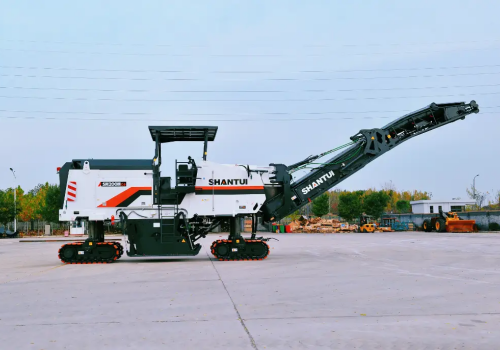

Depth control is a critical aspect of milling machine operation, directly impacting the precision and efficiency of road milling projects. Here is a detailed analysis of milling machine depth control.
I. Definition and Importance of Milling Depth
Milling depth refers to the vertical distance between the cutter drum's cutting teeth and the original road surface benchmark. This parameter requires real-time calibration using devices like laser rangefinders to ensure accuracy meets construction specifications. Precise depth control is vital for ensuring road surface smoothness, waterproofing layer adhesion, and minimizing material waste.
II. Principles of Milling Machine Depth Control Systems
Milling machine depth control systems typically utilize a linkage mechanism between the hydraulic system and the lifting device. Electro-hydraulic proportional valves control hydraulic cylinder flow, enabling millimeter-precise adjustment of the cutter drum's lifting speed. The system is also equipped with high-precision sensors, such as displacement sensors and laser rangefinders, to continuously collect data on road elevation and cutter drum position. A PLC or similar controller processes this data and executes control algorithms to enable automatic feedback adjustment of the milling depth.
III. Key Factors Affecting Milling Accuracy
Material Hardness Variations: Significant differences in the hardness of various asphalt mixes necessitate dynamic adjustment of cutting head pressure to prevent depth deviations caused by sudden material hardness changes.
Base Course Material Strength: Composite pavements require a stepped milling strategy. When milling in layers, the thickness of each layer and the height difference between adjacent layers must be controlled within specified limits to ensure interface flatness.
Tool Wear Condition: Tool wear affects depth control accuracy. Regular inspection of tool length loss and timely replacement of severely worn cutting heads are essential.
Controller and Sensor Accuracy: The precision of the depth controller and sensors directly impacts the effectiveness of depth control. High-precision equipment must be selected for construction.
IV. Application and Development of Depth Control Technology
Increasing Intelligence: Internationally leading brands have integrated laser ranging and PLC control systems to achieve automatic feedback adjustment of milling depth, with precision reaching up to 0.5mm. Domestic equipment is also progressively moving towards greater intelligence, improving response speed and control accuracy.
Expanding Application Scenarios: With technological advancements, the application scenarios for milling machines are continuously broadening. For instance, super-wide milling machines are now suitable for specialized applications like airport runways and industrial flooring.
Higher Energy Efficiency and Environmental Requirements: Amid increasingly stringent environmental regulations, depth control systems must also focus on energy saving and eco-friendly construction. Examples include using electric milling machines instead of gasoline models to reduce emissions, and optimizing milling depth and process parameters to lower material loss and energy consumption.
V. Operation and Maintenance of Depth Control
Operational Requirements: Operators must be familiar with the milling machine's depth control system, including its operating methods and precautions. They must ensure correct adjustment of the depth controller and continuously monitor the milling depth. Flexibility in adjusting milling modes and parameters based on road conditions and project requirements is also crucial.
Maintenance: Regular maintenance is key to ensuring the proper functioning of the depth control system. This includes checking the accuracy and sensitivity of sensors and the depth controller, cleaning and lubricating mechanical components, and replacing severely worn tools.
In summary, milling machine depth control is a crucial element in road milling operations, involving multiple areas of knowledge and technology. Through continuous optimization of depth control system principles, enhanced intelligence, expanded application scenarios, and improved operational and maintenance practices, the precision and efficiency of milling operations can be further elevated to meet the demands of various complex pavement projects.